Control hides in the joins. Not in the processor, the kernel, the model or the contract, but at the seams where one of them meets the next and each assumes the other is handling it.
This is AxisOps Labs, the technical insights of AxisOps, a UK agentic engineering and platform consultancy working across fintech, IoT, legal and other highly regulated industries. The insights read systems the long way: silicon to policy, firmware to procurement and the layers in between that only meet in production. Three questions, asked of everything:
- What does the technology make possible?
- What does it cost to build, run, repair and leave?
- Who can inspect it, change it or switch it off?
Boundaries are power
A boundary decides which memory a program can reach, which device can join a network, which code can boot and which person can repair a machine. It can be enforced in silicon, in software, in a cryptographic key or in a contract, and the finer the rule can be written, the finer the control. The mechanism varies; the operational question does not: who defines the rule, and who can change it?
That can put a capable model under an engineer's desk, keep hospital records hidden from a cloud operator or let an off-grid site run communications with no telco to ask. It can also enforce signed-only firmware, locked bootloaders and remote attestation as a condition of service. The machinery is the same in both lists. Whoever controls the rule decides which list you are on.
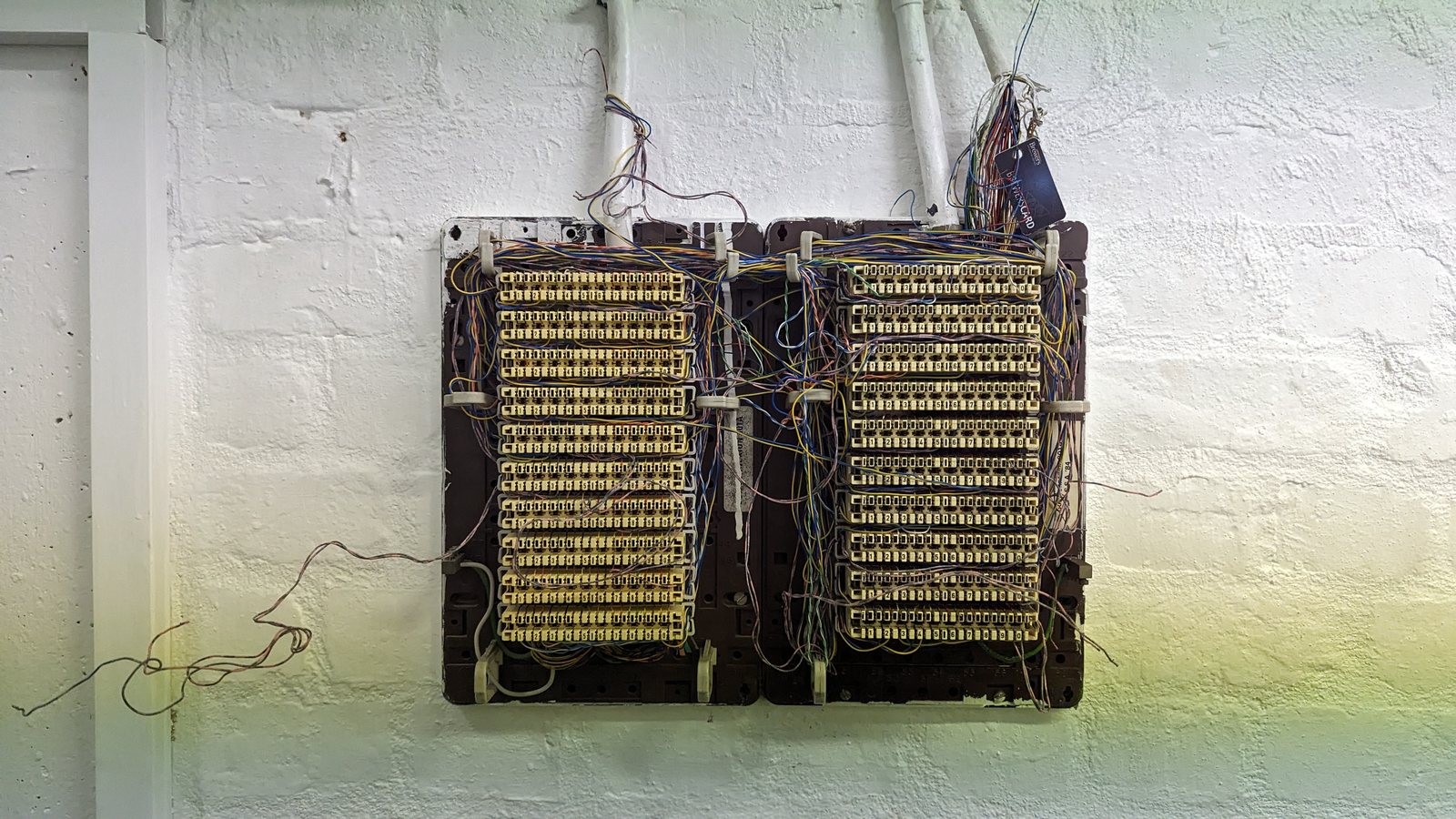
Where the rule lives also decides who can see it. Physical infrastructure wore its architecture on the outside: standardised interfaces, explicit connections, a system anyone with the right knowledge could read. The same decisions now sit in code, licences and keys, managed invisibly, and reading them is a privilege rather than a property of the room.
Ownership is operational
Buying hardware does not mean controlling it. If a vendor decides which parts are genuine, which firmware may boot or whether a modified device may use a service, the owner has possession and the vendor has control.
The same distinction applies to infrastructure, and it applies part by part. An operator controls a system when it can inspect it, change it, rebuild it and keep it running after a commercial relationship ends. Any part that still needs a subscription, a hosted control plane or a vendor-held key stays rented, whoever owns the metal.
The terms can also change underneath you. Seven years of relicensing, the forks that answered it and a vendor ending perpetual licences outright are written up in the insights: a licence is a term of trade, and the installed base finds out when the announcement ships.
That dependency scales. A hospital can be stopped by an identity provider. A country can call a cloud region sovereign while its control plane remains subject to another jurisdiction. An accelerator export rule written in units of processing power becomes part of the system specification. Procurement can lock a public service into a supplier before an engineer writes a line of code.
The insights
Six kinds of entry turn up here, worth telling apart as you read, because they deserve different weight:
- The technology we have looked at. Most of the insights. A thing gets read properly and written up at the depth it deserves.
- What is in the news, read against the record. Which version strings are actually affected, which published workaround trades one outage for another. Several entries exist because the answer at the time was "unknown".
- The dead ends we followed. Work that did not pay off.
- What we are implementing in our own systems. Where a conclusion turned into something running in production, and what it cost.
- What we think has legs. Marked as a bet.
- What we do not think works. A taxonomy a vendor can invoice against, a tuning exercise aimed at the wrong layer, a procurement model that selects for the appearance of risk transfer.
Most of our work is client work, under their name, NDAs and on their systems. What reaches these insights is the part that generalises: the problem without the client attached.
A few entries are more than the write-up of a big security item: they carry our public mitigation code, in repositories you can run as they stand, independently of any AxisOps service or control plane.
Five entries first published by The Network Factory are reproduced verbatim. Across the insights, where later events have overtaken an entry, the correction sits above the piece rather than inside it.
The full argument is in Where this goes next.